
The Dangers of Static Electricity in Industrial Environments
Movement of personnel can generate significant static charges, potentially exceeding 30,000 volts. These charges can lead to electrostatic spark discharges capable of igniting flammable atmospheres, a risk identified across a broad range of industries involving both plant equipment and personnel-based operations.
Mitigating Static Hazards with Dissipative Footwear
To mitigate static charge accumulation, workers are issued footwear designed according to EN ISO 20345 and ASTM F2413 safety standards, or recommended practices like IEC TS 60079-32-1 and NFPA 77, which incorporate static dissipative properties. Regular testing of this footwear is strongly recommended to ensure its dissipative properties do not change during use, as this cannot be detected by visual inspection alone. Organizations handling flammable and combustible materials in hazardous environments have an obligation to perform electrical resistance tests via in-house footwear testers.
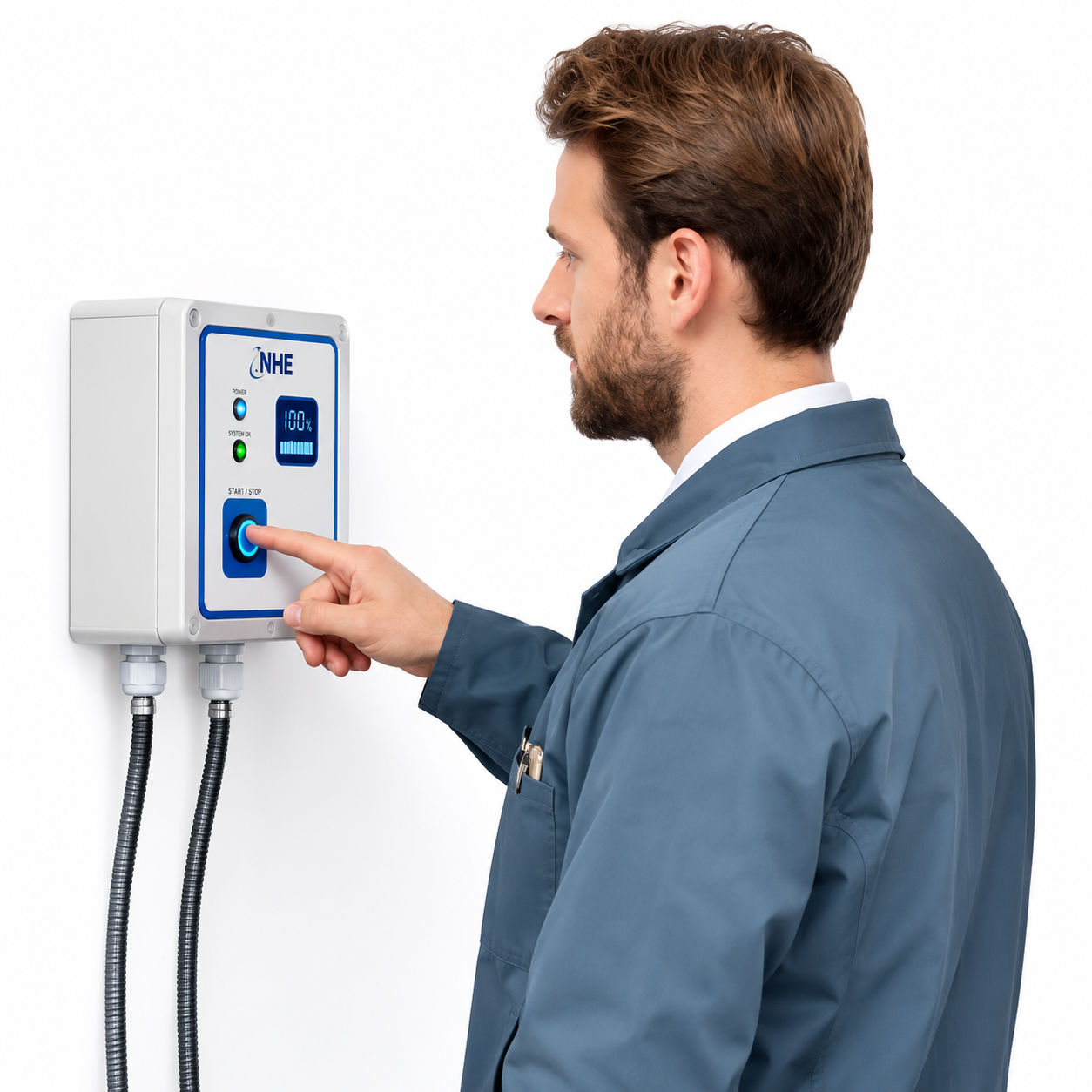
The Sole-Mate™ II tester from Newson Gale provides a time-efficient and cost-effective method to ensure personnel operating in hazardous areas are wearing static dissipative shoes capable of mitigating electrostatic charge accumulation on their bodies. The system tests the footwear's resistance to ensure static can dissipate from personnel through their shoes to ground.
Key Features and Operation of Sole-Mate II
- Typically located at the entrance to a hazardous area.
- Provides an instant 'pass' or 'fail' reading.
- Indicates a failed test (too high resistance) via a red LED and buzzer alarm.
- Indicates a passed test (fit for purpose) via a green LED.
- Includes an integral volt-free relay contact, allowing the system to be interlocked with facility access points, preventing entry to hazardous areas without a 'pass' reading.
Industry Standards and Testing Requirements
IEC TS 60079-32-1, section 11.3, on 'Dissipative and conductive footwear,' states that resistances can be measured with commercially available footwear conductivity testers. These typically measure resistance between a hand-held metal bar (via body and feet) and a metal plate on which the person stands. Alternatively, resistance between a shoe filled with shot pellets and a steel plate can be measured according to IEC TS 61340-4-3. The standard highlights that footwear resistance can increase due to factors like debris accumulation, use of orthopaedic insoles, and reduced floor contact area, emphasizing the need for frequent conductivity testing to confirm functionality.
Common Reasons for Footwear Test Failure
It is common for footwear to fail resistance tests, indicating a lack of a dissipative path to ground. Several factors can significantly alter the electrical resistance of static dissipative footwear:
1. **New footwear:** New shoes may have a slightly higher resistance due to material coating on the sole; resistance typically lowers once worn in.
2. **Coated footwear:** A common issue in the coatings industry, where paints or coatings build up on the sole. A cleaner sole usually results in lower resistance.
3. **Insulating inner sole:** Inserting an inner sole, common in everyday footwear, can isolate the individual's body from the shoes. Only safety footwear inner soles should be used.
4. **Wrong certification:** Testing shoes manufactured to EN ISO 20345 standards on a tester designed for NFPA 77 recommended practice can lead to false failures.
Newson Gale's Comprehensive Static Control Solutions
The Sole-Mate II footwear tester is an integral part of the extensive static grounding and bonding equipment available from Newson Gale. The company offers a wide range of solutions designed to provide optimum safety in explosive atmospheres across various process applications, mitigating static charge accumulation through practical and innovative design.
Newson Gale's Three Levels of Effective Static Control
- Grounding and bonding clamps
- Visual verification systems
- Interlockable control systems